
BrainsWay’s treatment platform is based on a unique breakthrough technology called Deep TMS, which can reach significant depth and breadth of the brain and produce broad stimulation and functional modulation of targeted brain areas.
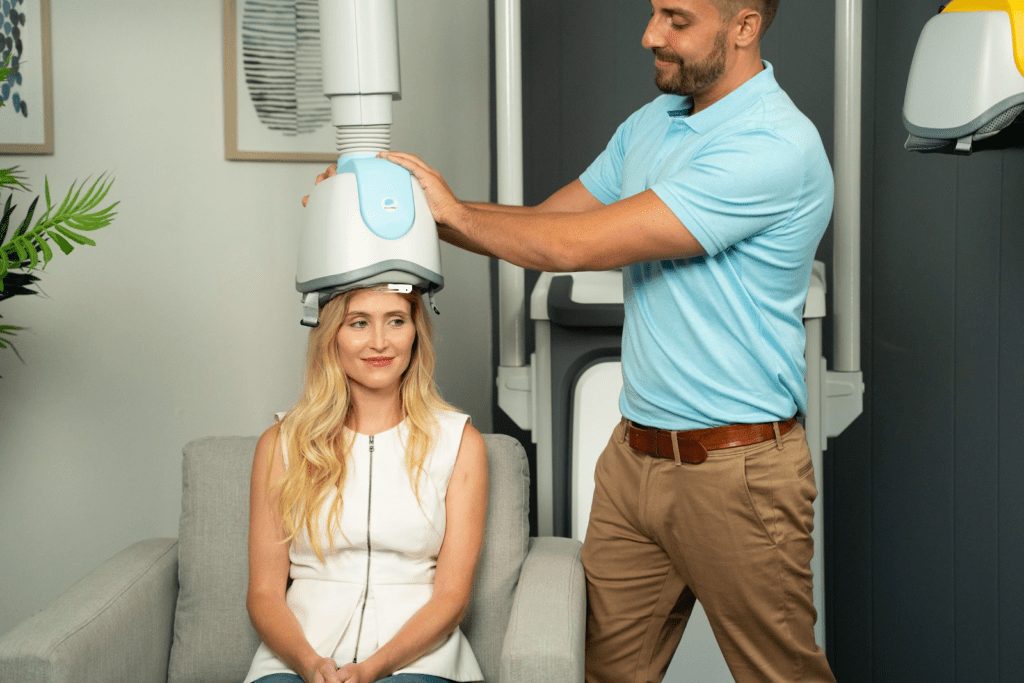
Deep TMS treatment features unique, patented coils that are fitted into a helmet, which is secured snugly to the patient’s head during the treatment. BrainsWay’s therapy has been utilized in over 60 clinical trials worldwide. In the U.S., the company’s device has been FDA cleared for the treatment of Major Depressive Disorder (MDD) since 2013, FDA cleared (De-Novo) for the treatment of Obsessive Compulsive Disorder (OCD) since 2018, FDA cleared as an aid for short-term Smoking Cessation since 2020, and has now received an expanded indication for Anxious Depression.
How Deep TMS Works
Deep TMS utilizes electromagnetic fields to safely and effectively regulate the neural activity of brain structures found to be related to the targeted mental health or neurological condition. As the treatment progresses, the relevant symptom’s conditions become less frequent and less severe, allowing the patient to experience and enjoy a better quality of life.
The Deep TMS Procedure
During a Deep TMS session, a cushioned helmet holding the treatment’s patented H-Coil technology is placed upon the patient’s head. The helmet is positioned to allow the optimal targeting of the sought-after brain structures, before the device itself is turned on. As the device is activated, its electromagnetic fields are sent to regulate the activity of the relevant structures across relatively wider areas of the brain, compared to the original, First-Generation TMS devices that preceded it. This allows Deep TMS to avoid the targeting issues that sometimes arise during First-Generation TMS sessions. Deep TMS is also able to directly regulate structures found in deeper, harder-to-reach areas of the brain, thereby increasing the treatment’s overall efficacy.
Possible Deep TMS Side Effects
As a non-invasive form of medical device treatment, Deep TMS has, in most cases, minimal, temporary side effects. The most common side effect to this treatment is a local and passing headache at the treatment site, which normally passes on its own after the first few treatment sessions. Over-the-counter headache medication can also be used to counter this temporary effect. Additional, less frequent side effects include muscle twitching and jaw pain. A small fraction of patients experience scalp sensations or facial twitching, but these, too, usually go away after the first few sessions, and can dissipate following adjustments to the helmet’s position and stimulation settings made to the device.
It should also be noted that Deep TMS does not include the significantly more severe side effects that often arise from other forms of medical treatment for mental health disorders: the possible side effects of antidepressant medication, for instance, include nausea weight gain, loss of sexual desire and sexual dysfunction, while electroconvulsive therapy (ECT) can cause short-term memory loss.
Who is Likely to Benefit from Deep TMS
Due to its multiple advantages, Deep TMS can likely benefit a number of different populations:
Deep TMS has been FDA-cleared in the US due to its ability to safely and effectively treat:
It has also been CE-marked in Europe to safely treat these and a number of other conditions, namely:
- Alzheimer’s Disease (AD)
- Autism
- Bipolar Disorder
- Chronic Pain
- Multiple Sclerosis (MS)
- Parkinson’s Disease
- Post-stroke rehabilitation
- Post-traumatic Stress Disorder (PTSD)
- The negative symptoms of Schizophrenia
Treatment-resistant patients are another group who can benefit from Deep TMS. In fact, a 2015 multicenter study published in World Psychiatry concluded that one out of three patients facing treatment-resistant depression achieved remission after undergoing four weeks of the Deep TMS treatment’s acute phase. 80% of patients who did not immediately respond to this treatment experienced an improvement later on, during the continuation phase. Deep TMS was found to have an even greater effect within a real-life setting: specifically, a study relying on the data of over 1000 participants treated for depression found that roughly 75% achieved a positive clinical response following Deep TMS, with one out of two participants achieving remission.
Patients who wish to rely on non-invasive, clinically-backed mental health treatments are also likely to benefit from this treatment. In fact, it is its non-invasive nature that allows Deep TMS to avoid the above-mentioned side effects that invasive treatments can entail.
Relying on its own, patented H-Coil technology allows Deep TMS to forgo the use of anesthesia and avoid a lengthy recovery period. As a result, its treatment sessions can be incorporated into the patient’s daily schedule, with the patient able to drive themselves from the treatment center following each session.
Deep TMS can also be incorporated into existing treatments, for an extra boost in efficacy. As such, patients already treated with medication can add Deep TMS to their treatment regimen, with many reporting a better overall effect on their targeted condition.er
GET IN TOUCH
Find a BrainsWay doctor near you.
Try TMS – A Proven Alternative Treatment for Depression
The 10-question Patient Health Questionnaire (PHQ-10) is a diagnostic tool introduced in 2001 to screen adult patients in a primary care setting for the presence and severity of depression. It rates depression based on the self-administered Patient Health Questionnaire (PHQ). The PHQ is part of Pfizer’s larger suite of trademarked products, called the Primary Care Evaluation of Mental Disorders (PRIME-MD). The PHQ-10 takes less than 3 minutes to complete and simply scores each of the 9 DSM-IV criteria for depression based on the mood module from the original PRIME-MD. Primary care providers frequently use the PHQ-10 to screen for depression in patients.
Take PHQ-10 Self Test
Proven Depression Relief That Lasts
83% of patients completing NeuroStar treatment experienced measurable depression relief, and
62% experienced full remission of their depression symptoms.
The #1 physician-recomended TMS treatment, accepted by most major insurance
If you’re grappling with Major Depressive Disorder (MDD) and have yet to discover relief through medications, BrainsWay Deep TMS presents a potential solution. With over 300 million individuals covered by insurance plans that include BrainsWay Deep TMS therapy, such as Medicare and Tricare, access to this treatment option is widespread.
Treating depression at the source
BrainsWay Deep TMS employs targeted magnetic pulses, akin to those used in an MRI, to rejuvenate dormant synapses in the brain. This process of “awakening” these connections can significantly impact neurotransmitter levels, offering the potential for long-term remission from depression for many individuals.
Not drugs, Not Electroconvulsive Therapy (ECT). What to expect
BrainsWay Deep TMS treatment requires neither sedation nor anesthesia, and there’s no downtime following sessions. It doesn’t affect your alertness, allowing you to drive home afterward and resume your regular activities.
GET IN TOUCH
